SpaceX Shares Drop 13% Amid AI Spending Fears and Share Unlock
SpaceX stock slid sharply as investor anxiety over AI spending and an upcoming share unlock overshadowed Musk's upgraded revenue forecast.
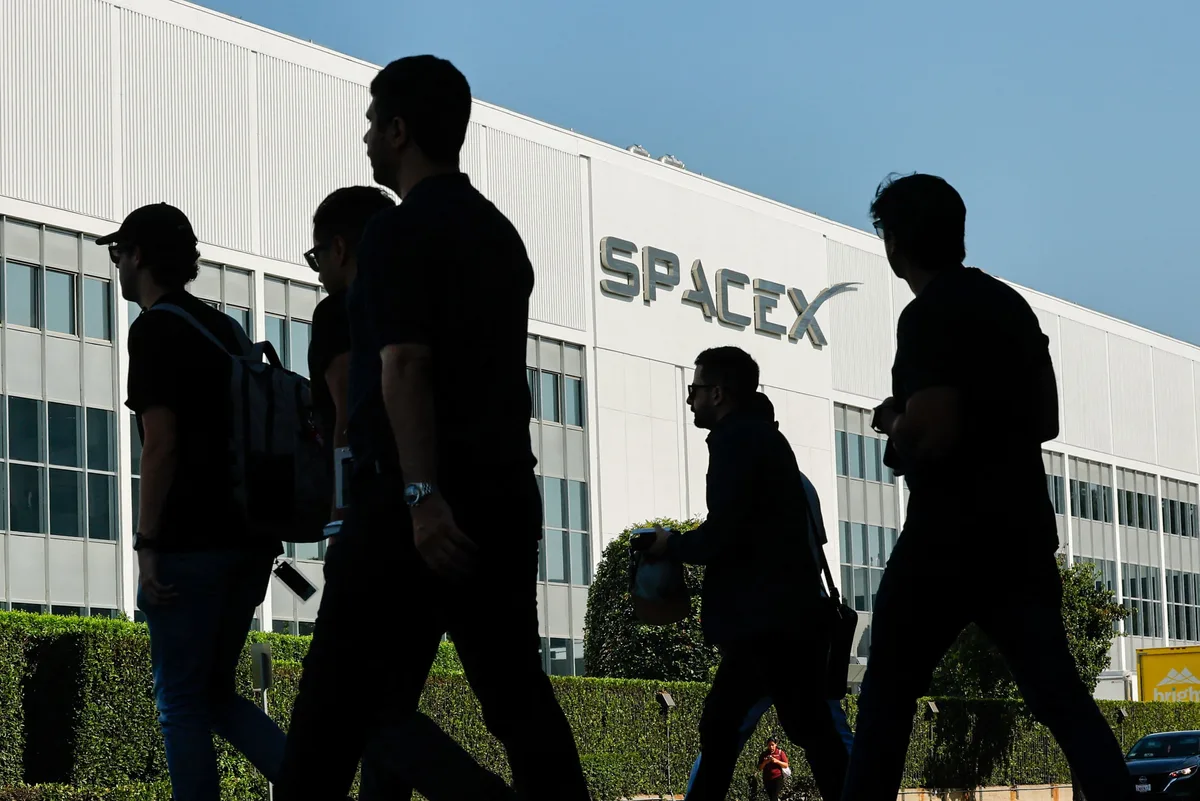
SpaceX shares fell roughly 13% as two converging pressures unnerved investors: a broader market skittishness around surging artificial intelligence expenditures and the imminent unlocking of a large block of company shares. The selloff illustrates how even high-conviction private-market darlings are not immune to the macro anxieties reshaping technology valuations across the board.
Against that backdrop, CEO Elon Musk attempted to steady sentiment by pulling forward the company's ambitious revenue milestone. Musk told investors SpaceX now expects to reach $1 trillion in annual revenue by 2030, accelerating the timeline by a full year from the prior projection of 2031. The revision signals operational confidence — in launch cadence, Starlink subscriber growth, and government contract pipelines — but it was not enough on its own to arrest the day's decline.
Read more Galaxy Digital Posts $85M Net Loss as Crypto Markets Slump in Q2 →
The juxtaposition is instructive. Bullish forward guidance can struggle to compete with near-term technical selling pressure, particularly when a large share unlock introduces fresh supply into a market already on edge. Unlocks of this scale tend to create overhang anxiety even before a single share is sold, as investors price in the possibility of significant liquidation by early stakeholders.
The AI spending angle adds a second layer of complexity. As hyperscalers and defense-adjacent tech firms pour capital into compute infrastructure, questions about opportunity cost and competitive prioritization ripple through adjacent sectors. For SpaceX, whose Starlink satellite network sits at the intersection of connectivity and AI-era data demand, the concern is less about direct exposure and more about whether capital rotation could redirect institutional appetite away from space-economy bets.
What the episode ultimately underscores is the tension between long-cycle industrial ambitions — building rockets and orbital internet networks across decades — and the quarter-to-quarter psychology of modern investors. Musk's one-year acceleration of the $1 trillion revenue target is a meaningful signal, but markets in risk-off mode often discount tomorrow's promise against today's uncertainty. Continue reading at US Top News and Analysis.